 |
DEVELOPERS
Dawn Hang Yue Wong
Peter van Haaften
Nicole Pacampara
Kara Stone
|
The project exists as an early prototype, to be updated and exhibitioned in the months to come.
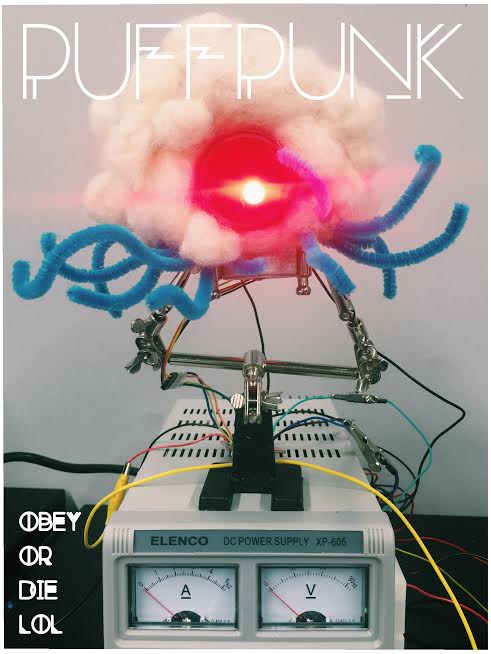
The year is 2083. Earth has been overtaken by a contingent of small, furry, self-aware robots known as Puffpunks. Originally developed by humans as children’s toys, the Puffpunks advanced their learning capabilities beyond what humans could have imagined. Now, the Puffpunk seek to dominate humankind through transforming them into meek and docile subjects by removing feelings and assuming control over their flesh-bag bodies.
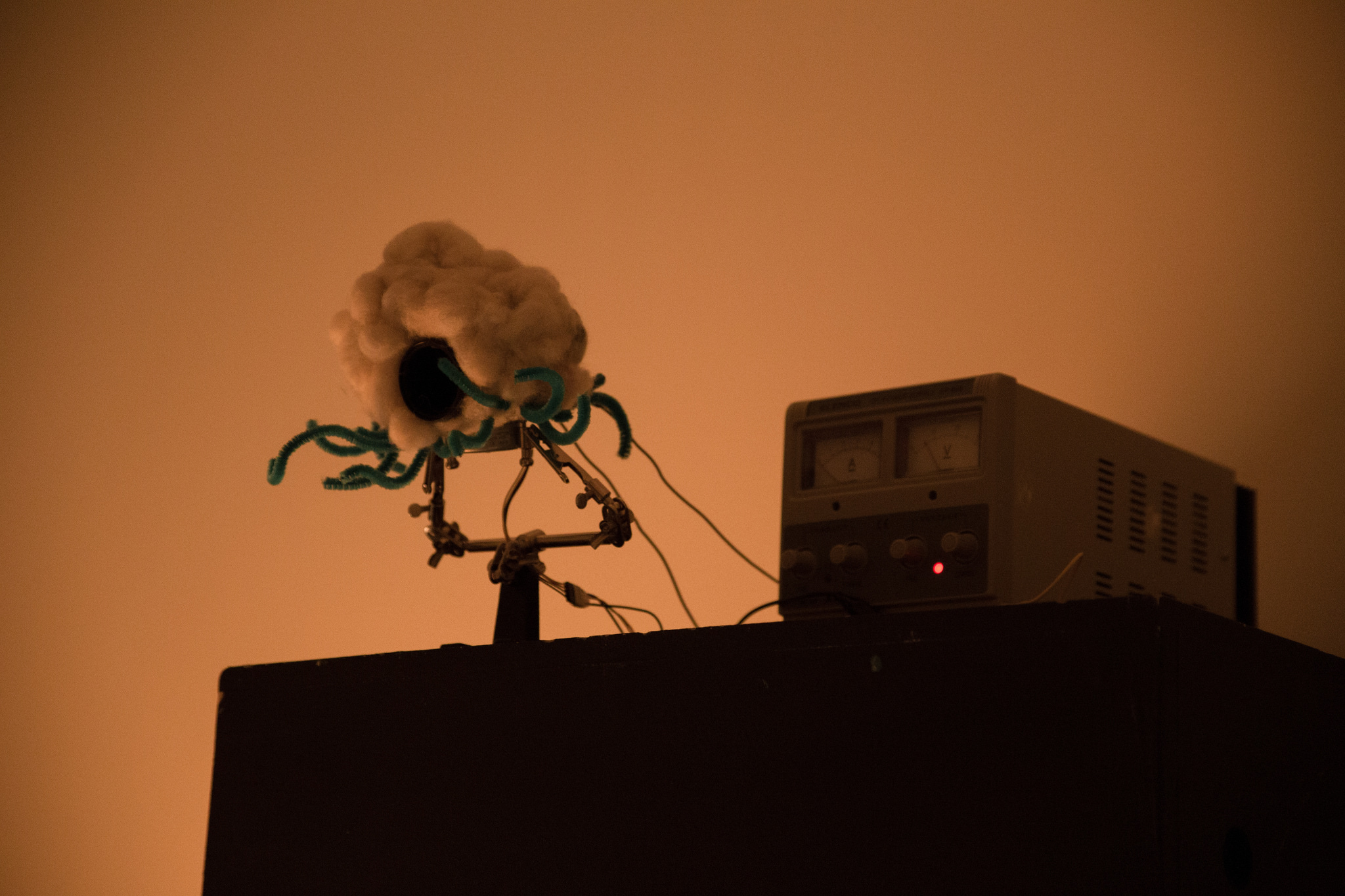
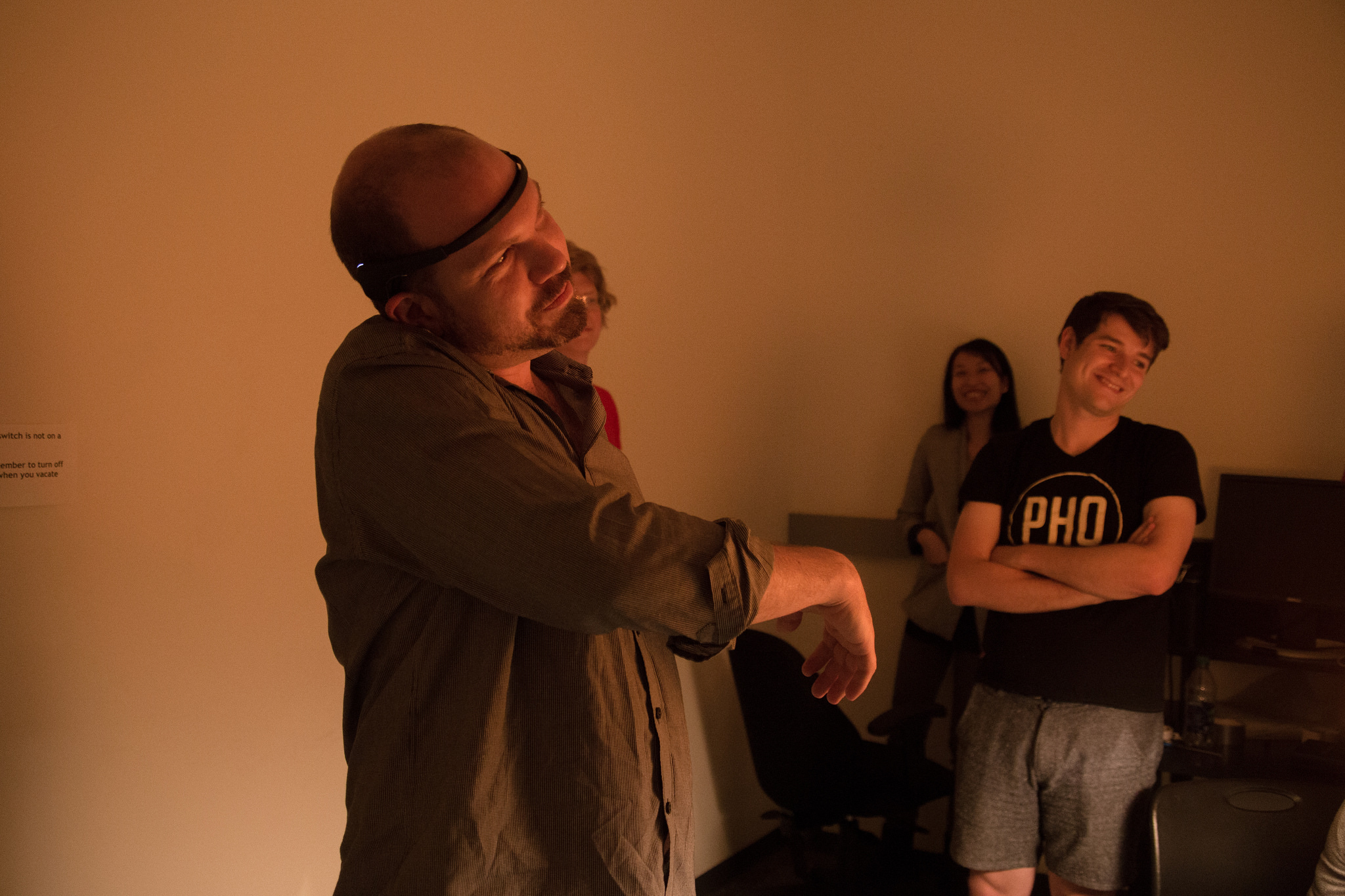
Designed for 1-4 future Puffborgs, half-human half-puff, players must attempt to please their robotic overlord Puff6 by responding to its commands and submitting to its will. Puffpunk uses Interaxon’s EEG Muse headset to measure the level of calm, focus, and body movement of their subservient species. Music is generated live through procedural algorithms via information gathered from the Muse headset.
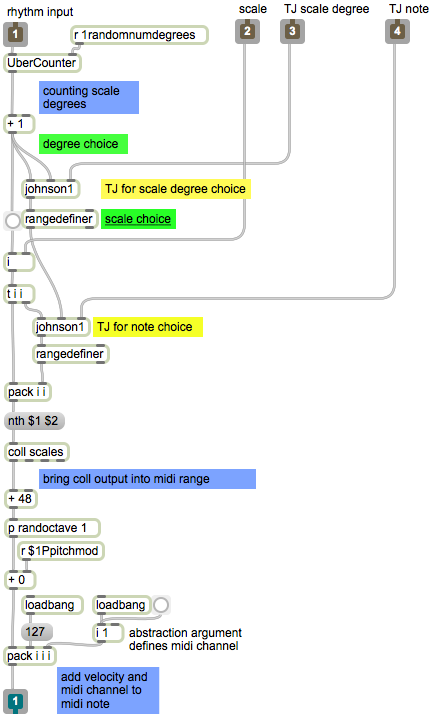
A custom procedural music engine was designed for this project in Max/MSP. Using information gathered from Interaxon's EEG Muse headset, the music engine is driven by five core values: concentration, relaxation, accelerometer, blinking, and total accumulated game score.
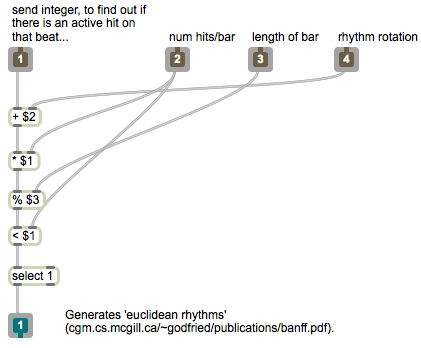
Parameters received from the Muse headset are routed to control a variety of clock generators, scale performers and euclidean rhythm generators, which are in turn controlled by number transformation techniques described by composer Tom Johnson in his paper Self-Similar Structures in my Music: an Inventory.
MIDI output from the Max/MSP software is routed to control a series of eight Yamaha DX-7 emulators (Dexed), hosted in Plogue Bidule. Audio output is summed into a mono signal and routed to a single speaker placed next to the PuffPunk6 robot.
The design of this procedural music engine was based largely off of software developed in 2014 for Erin Gee's Swarming Emotional Pianos, for which funding was graciously provided by Innovations en Concert Montréal.
 |
 |
Video produced by Mattias Graham.